

Infrared Underfloor Heating
Energy Efficient. Safe. Consistent
HEAT DECOR

Discover the future of home comfort with heating foils — the smarter, more efficient alternative to traditional heating cables.
• Energy-saving: Foils heat at just 22–24°C, compared to cables that need ~80°C.
• Comfort-focused: Gentle, even warmth that feels natural and cozy.
• Versatile: Perfect under laminate or screed, while cables remain best for tiles.
• Advanced technology: Carbon-graphite film transforms electricity into long-wave infrared, warming surfaces directly.
With heating foils, you get lower energy costs, faster response times, and superior comfort — all wrapped in cutting-edge design.
How it works
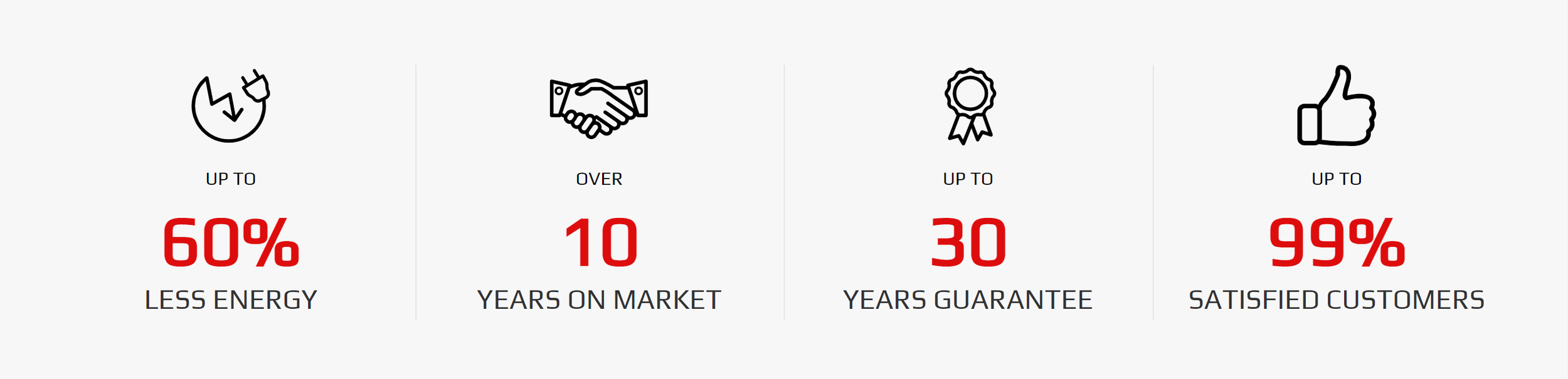
The beauty of infrared heating is that feeling warm or cold doesn’t depend on the temperature of the surrounding air. Traditional heating, which is convection-based, relies upon the air temperature to increase before you feel warm. When infrared waves touch a surface, energy is released in the form of heat, irrespective of the surrounding air temperature. This explains why people on a winter sports holiday can enjoy a pleasant sunbath at low outside temperatures without feeling the cold. Unlike conventional systems, Infrared heating units heat the walls, ceiling and furnishings – not the air. Walls retain heat for longer than air and return warmth to the room. They stay dry, giving mould and mildew no chance to spread. A further advantage lies in the fact that there is no circulation of the air, therefore no dust is raised. Perfect for allergy suffers Our heating film is of the highest quality so we provide a guarantee for the heating system assembled by a professional installer for 30 years! there is no better, more advanced heating technology than a heating film. We are manufacture of the infrared heating elements panels and carbon heating films and can assume that the precision of manufacturing with a functionality makes it irreplaceable in its branch.

Infrared heating in aciton
This is the heating film placed before putting the tiles down. Below is how the same room looks under a thermal camera
